
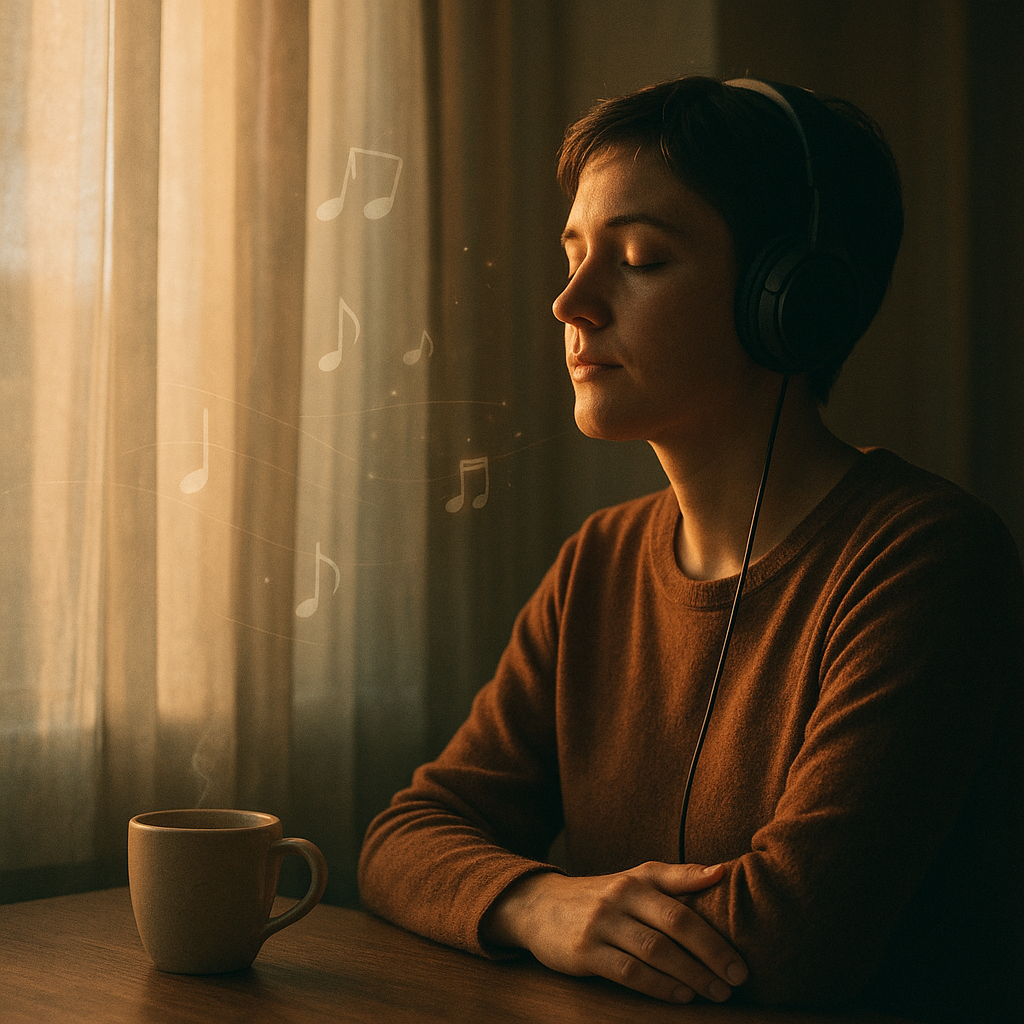
There’s a particular kind of magic that happens when a song finds you at exactly the right moment. Maybe it’s a melody that plays while you’re driving alone at night, or a lyric that cuts straight through the noise of a busy day and lands somewhere deep. Music has always been more than entertainment — it’s a mirror. And the reflection it offers can be startlingly honest.
The relationship between music and self-reflection is one of the most fascinating aspects of human psychology. It’s something most of us have experienced personally, yet rarely stop to examine. How does sound — vibrations moving through the air — manage to unlock memories, shift our emotional states, and help us make sense of our own lives? The answer is more layered than you might expect.
The Science Behind Music and Emotional Processing
Music doesn’t just make us feel things — it actively engages the parts of the brain responsible for memory, emotion, and self-referential thought. Research published in journals across neuroscience and psychology has consistently shown that listening to music activates the default mode network, which is the same brain network associated with daydreaming, reminiscing, and thinking about ourselves and others.
A study from the University of California found that music triggers the release of dopamine — the brain’s reward chemical — particularly during moments of emotional peak in a song, such as a key change or a soaring chorus. This neurological response is part of why certain songs feel so significant. They’re not just pleasant; they’re chemically reinforcing meaningful emotional states.
But beyond the neurochemistry, music also serves as what psychologists call an emotional scaffold. When we’re struggling to name or process a feeling, melody and rhythm can give it a shape. Hearing someone else’s voice articulate something you’ve been unable to express yourself creates a sense of being understood — even when that voice belongs to a stranger who recorded a song years ago in a different country.
What Is Introspection in Music?
Introspection in music refers to the way certain songs, lyrics, or even instrumental compositions prompt inward thinking — encouraging the listener to examine their own thoughts, feelings, and experiences. It’s not limited to any one genre. A quiet folk ballad might do it. So might a sprawling post-rock instrumental or a confessional hip-hop verse.
Introspective music typically shares certain qualities: a slower or more deliberate pace, lyrical honesty, harmonic tension, or a sense of space in the production. These elements create a kind of psychological pause — an invitation to slow down and sit with yourself. Artists like Nick Drake, Phoebe Bridgers, Sufjan Stevens, and Bon Iver have built entire careers on this quality. Their music doesn’t just entertain; it creates conditions for reflection.
Interestingly, introspection in music isn’t always melancholic. Uplifting music can also provoke deep self-reflection — particularly when it stirs feelings of gratitude, ambition, or a renewed sense of purpose. The key isn’t the mood; it’s whether the music creates a space for inner dialogue.
Music as a Container for Memory
One of music’s most remarkable powers is its ability to transport us through time. A single song can collapse years in an instant — placing you back in a childhood bedroom, a first relationship, or a period of your life you thought you’d nearly forgotten. This phenomenon is known as music-evoked autobiographical memories (MEAMs), and researchers have found that these memories tend to be more vivid and emotionally rich than those triggered by other sensory cues.
This connection between music and memory is partly why so many people return to the music of their adolescence and early adulthood throughout their lives. Between the ages of roughly 12 and 25, we’re in the midst of intense identity formation. The music we love during this period becomes woven into the fabric of who we are — and revisiting it can feel like revisiting an earlier version of ourselves.
This isn’t mere nostalgia. It’s reflection. When a song takes you back, you’re not just remembering an event — you’re often reconsidering it. You might notice things you missed at the time, feel compassion for a younger self, or recognise patterns you’ve carried forward. In this way, music becomes a tool for understanding your own story.
How Different Genres Shape Different Kinds of Reflection
Not all music invites the same kind of introspection. Different genres tend to prompt different reflective modes, and understanding this can help you use music more intentionally in your own life.
- Classical and ambient music tend to create open, meditative states — ideal for processing complex emotions or engaging in creative thinking without the distraction of lyrics.
- Singer-songwriter and folk music, with its emphasis on personal storytelling, often encourages listeners to map their own experiences onto the narrative, prompting emotional recognition and empathy.
- Blues and soul have a long tradition of articulating hardship and resilience, offering a kind of communal language for pain and survival.
- Hip-hop and spoken word often engage directly with identity, culture, and lived experience — making them particularly powerful for listeners navigating questions of who they are and where they come from.
- Post-rock and experimental music can evoke emotional landscapes without prescribing specific feelings, giving listeners more room to project their own inner experience onto the sound.
None of this is prescriptive, of course. People find reflection in every genre imaginable. What matters is your personal relationship with the music — the meaning you bring to it and the meaning it draws out of you.
Music, Solitude, and the Practice of Listening
There’s a difference between having music on and actually listening to it. In an age of playlists and algorithmic queues, music often becomes background noise — pleasant, but not particularly transformative. True reflective listening requires something increasingly rare: intentional solitude.
Many people report their most meaningful musical experiences happening when they’re alone — on long walks, during late-night drives, or simply sitting quietly with a record playing. This isn’t accidental. Solitude removes the social performance of listening; you’re no longer thinking about how you look or what you’re supposed to feel. You’re simply present with the music and, by extension, with yourself.
Interestingly, this connects to what some music educators refer to as the three-minute rule — the idea that a well-crafted song should communicate its emotional and narrative core within roughly three minutes, creating an intense, focused experience. Whether or not you subscribe to this as a compositional principle, it speaks to something true about engaged listening: brevity and intention matter. A three-to-four-minute song, listened to with full attention, can be more impactful than an hour of passive background listening.
Practical Ways to Use Music for Self-Reflection
If you’re interested in using music more deliberately as a reflective practice, there are a few approaches worth exploring:
- Journalling alongside music: Choose an album or playlist and write freely while listening. Don’t overthink it — let the music guide what surfaces.
- Revisiting old favourites: Return to music that was significant during earlier chapters of your life. Notice what it stirs up now versus then.
- Creating intentional playlists: Build playlists around specific emotional states or life questions you’re sitting with. Curating music is itself a reflective act.
- Listening without multitasking: Set aside time to listen to an album from beginning to end, without your phone or other distractions. This is increasingly countercultural — and increasingly valuable.
- Paying attention to what you skip: The songs you avoid can be as revealing as the ones you return to. Sometimes we sidestep music because it touches something we’re not ready to feel.
The Social Dimension: Shared Music and Collective Reflection
Reflection isn’t always a solitary process. Music also shapes how we reflect collectively — as families, communities, and cultures. Shared musical experiences, from concerts to communal playlists to the soundtracks of cultural moments, create a kind of collective memory. They give groups of people a common emotional vocabulary.
Consider how national anthems, protest songs, or generational anthems function. They don’t just reflect shared values — they help form them. Music is one of the primary ways cultures process collective experiences, whether that’s grief, celebration, anger, or hope. Individual listeners are always embedded in these larger cultural conversations, whether they’re aware of it or not.
This also explains why questions of artistic integrity and ownership matter so much to people. When a song becomes part of your identity — part of the story you tell about yourself — it feels deeply personal. The controversy around artists objecting to their music being used in political contexts without consent touches on something real: music is not neutral. It carries meaning, and that meaning belongs, at least partly, to the listeners who’ve made it their own.
Why Music’s Reflective Power Matters Now
In an era defined by speed, distraction, and information overload, the reflective capacity of music feels more important than ever. Many people report feeling disconnected from their inner lives — unsure of what they actually feel beneath the noise of daily demands. Music offers one of the most accessible, low-barrier pathways back to that inner life.
It requires no special equipment, no training, and no particular expertise. It meets you where you are. And in those moments when a song genuinely reaches you — when it seems to know something about you that you’d barely articulated to yourself — it’s doing something quietly profound. It’s reminding you that your inner life is worth paying attention to.
Conclusion
Music’s capacity to shape self-reflection is not incidental — it’s one of its defining functions. Through memory, emotion, identity, and narrative, music gives us language for experiences that might otherwise remain unexamined. It anchors us in our personal histories while helping us make sense of who we’ve become.
Whether it’s an introspective folk record, a classical piece that stills the mind, or an old song that suddenly hits differently at 35 than it did at 17, music continues to serve as one of the most powerful tools for understanding ourselves. The key is to listen — not just with your ears, but with genuine attention to what gets stirred in the process.
The songs you love are not just entertainment. They’re part of your autobiography. And listening to them, really listening, is one of the quieter and more underrated ways of knowing yourself.
Leave a Reply